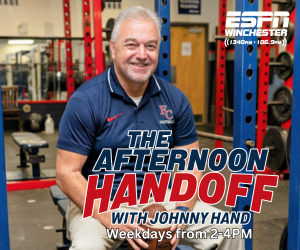




WINCHESTER, Tenn. (Jan. 21, 2026) — Franklin County’s new head football coach, Chuck Reid, made his first LIVE appearance on ESPN Radio Winchester’s The Afternoon Handoff on Tuesday alongside Ryan Gilmer and Coach Cowan, members of the search committee that helped guide the hiring process.
One of the clearest takeaways from the conversation was just how early Reid separated himself in a crowded field.
Reports from committee members have indicated the job drew 40-plus applications, spanning multiple interviews, but emphasized that Reid was identified as “their guy” early in the process, coming out of the first round. Gilmer described Reid’s answers as consistent, saying the coach presented a structure the committee liked — especially in areas the committee had prioritized, including discipline, organization, and a clear plan for program direction.
According to Gilmer and Cowan, Reid’s name continued to surface as the favorite each time the committee met, and the committee felt Reid’s vision for the program aligned closely with what they believed Franklin County football could become.
Early buy-in at the middle school level
Another major point of discussion was the reaction from the middle school programs. Reid has already visited feeder programs at North and South Middle Schools and met with players and coaches, and community feedback has reflected a consistent level of excitement — particularly among younger athletes.
Reid referenced 45 upcoming eighth graders during the interview, and local coaches and parents echoed the enthusiasm. Gilmer and Cowan described Reid as being “on fire” when addressing players, an energy they believe has helped create immediate momentum around the program.
The emphasis on vertical alignment — building one shared system from middle school to high school — was repeated throughout the interview. Reid spoke about the importance of introducing base concepts early, getting players around the high school program at a young age, and building a culture where kids “want to be a Rebel.”
Staff structure, autonomy, and administrative support
From a staffing standpoint, Reid was direct: he wanted the ability to select his own staff and explained to the committee what he believed was necessary for the program to be successful. He stated that the opportunity had to be a “special deal” to leave his previous position and said the administration was supportive of the structure he requested.
Reid also noted Franklin County’s facilities — including the stadium and athletic building — as positives, while acknowledging there are improvements that can help push the program forward.
He contrasted Franklin County’s district size with his previous experience, describing a larger district where hundreds of athletes participated across multiple schools. In Franklin County, Reid said he values the ability to know players across the system and work with athletes from sixth grade through high school, rather than only seeing them once they reach varsity.
Offense, defense, and a “fit the kids” approach
When asked about offensive philosophy, Reid said he plans to run what best fits the current roster — a message that resonated with many listeners as a “players-first” approach rather than forcing a system.
Reid referenced past success tailoring offensive decisions to how defenses responded, noting that even in spread looks, the run game remained a key part of winning football. He added that he expects to serve as the offensive coordinator and primary play-caller.
On defense, Reid said he has a veteran coach lined up — described as having “some hardware” — and indicated the defense will likely feature more of a 3–4 look.
Middle school structure, playing time, and keeping kids in the program
The interview also touched on one of the most debated topics locally: participation, playing time, and retention. Reid said he supports giving younger athletes opportunities to compete — not just practice — to help keep kids engaged and in the program long-term.
He explained that players develop at different rates and that some athletes who are smaller in seventh and eighth grade may later experience growth spurts and become high-impact contributors. He stressed the importance of not losing those potential players before they mature.
Reid also addressed expectations directly: “The best kid plays,” adding that he doesn’t have pre-existing ties or obligations and will evaluate players based on performance and readiness.
QB Club, community involvement, and program support
Reid highlighted the importance of an active QB Club, calling organized support and involvement a positive factor in building a successful program. He referenced learning from the structure of similar support systems in Plano and said that when run well, those groups can have a meaningful impact.
Community response to early meetings has been notably optimistic. One parent commented following a parents meeting and QB Club meeting, “I am beyond optimistic about the upcoming season.”
Offseason competition, multi-sport athletes, and an open invitation
Reid encouraged athletes to continue competing in the offseason, including playing multiple sports. He cited benefits that go beyond football: competing year-round, working with different coaches, building new relationships, and developing better overall athleticism through sports like basketball, track, and wrestling.
He also extended a message to students who haven’t played football before: you don’t need years of experience to contribute if you’re coached well — an invitation aimed at expanding participation and strengthening rosters.
Recruiting focus: “They keep score for a reason”
Reid said recruiting is one of the most rewarding parts of coaching because it creates life-changing opportunities for players. He noted he has seen hundreds of athletes move on to the next level and said it bothers him when recruiting is not treated as a priority.
Reid stated he plans to build time into his schedule to support recruiting efforts and said he expects help from other coaches on staff. He added that he enjoys talking football with other coaches and learning new ideas — an approach he believes helps keep programs evolving.
When asked about expectations for Year 1, Reid said the program is not “building for the future” at the expense of current players. He emphasized that the staff owes it to seniors to put a competitive team on the field immediately, while also defining success through off-the-field growth and accountability.
As the discussion returned to results and expectations, Reid summed up the balance between process and performance with a simple line: “They keep score for a reason.”
With Reid now officially in place and visible throughout the community, one phrase repeated in local conversations following the interview: Coach Reid is in the building — and excitement is building with him.
For more details on these stories and more, visit 931GO.com – stay informed and stay connected to ESPN Radio Winchester.